Handling card payments is no longer just about speed and convenience. For Indian businesses, secure card data handling and alignment with PCI-DSS requirements have become commercially non-negotiable, driven by rising fraud risks, stricter regulations, and growing customer awareness.
Yet, achieving PCI compliance often feels complex, expensive, and operationally heavy—especially for startups and SMBs. This is where tokenization in payments and payment compliance automation significantly reduces compliance risk and effort.
In this blog, we break down how Indian businesses can implement PCI-DSS compliant payment flows using tokenization APIs, without overburdening their tech or compliance teams.
What Are PCI-DSS Requirements?
PCI-DSS (Payment Card Industry Data Security Standard) is a global security framework designed to protect cardholder data.
If your business:
- Accepts card payments
- Stores card details
- Processes or transmits card data
You must comply with PCI-DSS requirements, regardless of size or transaction volume.
Core PCI-DSS Objectives
- Protect cardholder data
- Prevent data breaches and fraud
- Standardise secure payment practices
Why PCI-DSS Compliance Is Critical for Indian Businesses
India’s digital payments ecosystem is growing rapidly—but so are fraud risks and compliance expectations across the card payment ecosystem.
Key India-Specific Drivers
- RBI mandates minimal card data storage and promotes tokenization
- Increased focus on card-not-present fraud prevention
- Greater compliance scrutiny from acquiring banks and card networks for fintechs, marketplaces, and SaaS platforms
- Customer trust is strongly influenced by visible payment security cues
For Indian SMBs, failure to align with PCI-DSS requirements can lead to:
- Financial penalties or higher compliance costs imposed by the acquiring bank.
- Restrictions or suspension by payment partners.
- Reputational damage following security incidents.
- Disruption or suspension of card payment flows in serious cases.
The Problem With Traditional Card Data Handling
Many businesses unknowingly expand their PCI compliance scope by:
- Storing raw card numbers in databases.
- Passing card data through backend servers.
- Logging sensitive fields in application logs.
- Relying on encryption approaches that still expose card data within internal systems.
Result?
- Higher compliance costs
- Larger audit scope
- Increased breach liability
This is exactly the type of risk and scope expansion that tokenization in payments is designed to significantly reduce.
What Is Tokenization in Payments?
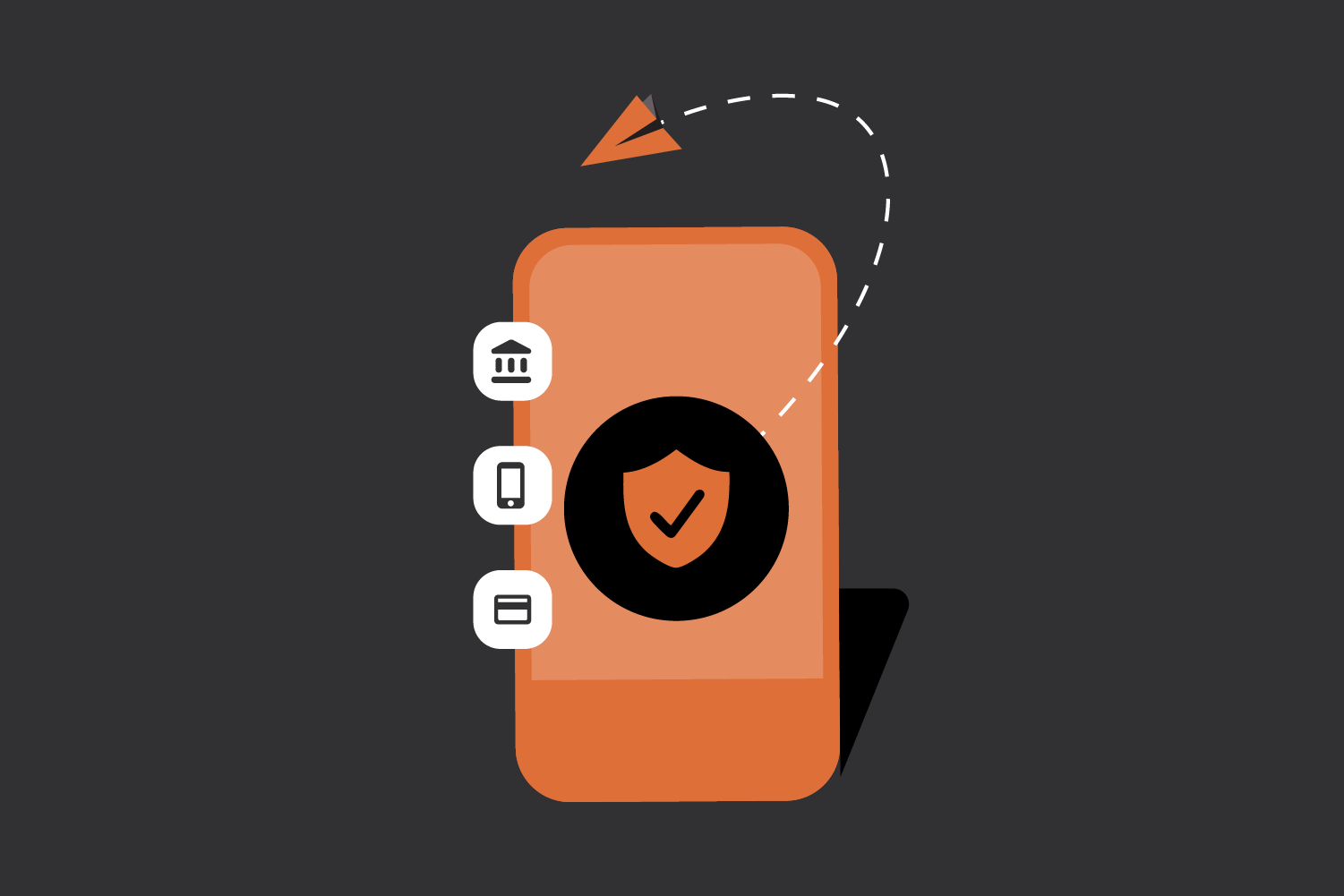
Tokenization replaces sensitive card data—primarily the card number (PAN)—with a randomly generated token that has no exploitable value outside the payment ecosystem.
Note: Sensitive authentication data such as CVV is never stored or tokenized and is used only during the authorization process, in line with PCI-DSS requirements.
How tokenization works (Simplified)
- The customer enters their card details
- Card data is sent securely to a tokenization service
- A unique token linked to the card is generated
- The token is stored and used for future transactions
In most modern setups, the actual card data is handled by the tokenization provider, reducing or eliminating the need for your servers to process sensitive card details.
Tokenization vs Encryption: What’s the Difference?
| Aspect | Tokenization | Encryption |
| Data reversibility | Not reversible outside the token vault | Reversible with encryption keys |
| PCI scope reduction | Significant | Limited |
| Storage risk | Minimal | Moderate |
| Breach impact | Tokens are unusable if exposed | Encrypted data may be exposed if keys are compromised |
For PCI-DSS–compliant payment flows, tokenization is widely considered more secure and audit-friendly than relying on encryption alone.
How Tokenization Reduces PCI Compliance Scope
One of the biggest advantages of tokenization is reducing PCI audit scope.
Without Tokenization
- Backend servers are in scope
- Databases are in scope
- Logs and monitoring tools are in scope
- More complex and time-consuming audits
With Tokenization APIs
- Card data is transmitted directly to the tokenization provider, bypassing your servers.
- Only systems that handle tokens or interact with the token vault remain in scope.
- Audit surface is smaller
- Certification cycles are faster
This reduction in scope is a major win for payment compliance automation.
Step-by-Step: Implementing PCI-DSS Compliant Payment Flows
Step 1: Identify card data touchpoints
Audit where card data enters, moves through, or could be stored across your systems.
Pro tip: Application logs, error trackers, and analytics tools often capture card data unintentionally.
Step 2: Shift card capture to tokenization APIs
Use hosted or embedded secure card input flows that tokenize card data at the point of entry, before it reaches your backend.
Step 3: Store only tokens, never card data
Your databases should store only:
- Token ID
- Customer reference
- Limited, non-sensitive metadata (such as card network or last four digits)
Step 4: Use tokens for recurring or one-click payments
Tokens enable secure:
- Subscriptions
- Saved cards
- EMI flows
- Retry logic without requiring customers to re-enter card details
Step 5: Automate compliance monitoring
Use dashboards and system logs to:
- Track token usage patterns
- Monitor access and system activity
- Generate evidence for PCI audits
This is where payment compliance automation significantly reduces time, cost, and operational effort.
Common Mistakes to Avoid
- Storing masked PANs unnecessarily and assuming they are always out of PCI scope.
- Tokenizing card data but still logging raw PAN or CVV in application logs.
- Using multiple or inconsistent token formats across systems.
- Ignoring RBI guidelines on card data storage and tokenization.
Pro Tips for Indian SMBs
- Start with a token-first architecture.
- Keep compliance documentation updated quarterly.
- Train support teams on token handling.
- Avoid custom card data handling unless absolutely required.
- Align the tokenization strategy with RBI and NPCI norms.
Conclusion
As digital payments continue to grow in India, securing cardholder data has never been more important. Implementing PCI-DSS compliant payment flows with tokenization allows businesses to minimize PCI scope, reduce breach risk, and simplify recurring or one-click payments. For Indian SMBs, these practices are essential not only for compliance but also for building customer trust and supporting scalable growth.
Using encryption and tokenization within your payment system, powered by a reliable payment gateway API like Zwitch, helps safeguard both customer information and your business. These methods ensure that sensitive card data never touches your servers, reducing PCI compliance scope. By adopting them, businesses can reduce fraud, ensure regulatory compliance, and maintain smooth, secure payment operations.