Digital payments are the backbone of modern commerce, whether you’re running an e-commerce store, a subscription-based service, or a brick-and-mortar business. But when it comes to setting up your payment infrastructure, you’ll likely encounter two commonly used terms: Payment Gateway (PG) and Payment Aggregator (PA). While they often work together, they serve distinct purposes. This guide will demystify these concepts, explain their differences, and help you choose the right option for your business. By the end of this blog, you’ll have a clear understanding of the debate: payment gateway vs payment aggregator.
What is a Payment Gateway?
A payment gateway is the technology backbone that connects your online store to the banking system, enabling you to process customer payments in real time. Think of it as a secure translator that converts your customers’ payment information into a format banks can understand and approve instantly.
Key Functions of a Payment Gateway:
- Real-time Payment Processing: Captures customer payment details, validates them instantly, and communicates with banks to approve or reject transactions within seconds.
- Data Protection & Security: Uses encryption protocols and tokenization to ensure customer payment information never sits unprotected on your servers, keeping your business compliant with PCI DSS standards.
- Multiple Payment Method Support: Enables customers to pay however they prefer, credit cards, debit cards, UPI, net banking, and digital wallets all through a single integration point.
- Fraud Detection & Prevention: Monitors transactions for suspicious patterns and blocks unauthorized payments before they harm your business or customers.
Benefits of Using a Payment Gateway:
- Accept payments instantly without lengthy bank account setup processes.
- Build customer trust through secure, verified payment processing.
- Reduce chargebacks and fraud losses with built-in security measures.
- Customize your checkout experience to match your brand and improve conversion rates.
- Access real-time transaction data to understand payment trends and customer behavior.
Why Payment Gateways Matter:
Without a payment gateway, your online store cannot process credit card payments or any digital transactions. It’s the critical infrastructure that makes e-commerce possible by bridging the gap between customers, merchants, and financial institutions. Whether you’re selling products, services, or subscriptions, a payment gateway is non-negotiable for accepting online payments.
How Payment Gateways Work in Practice:
- Customer enters payment details during checkout
- Gateway encrypts and securely transmits data to payment processors
- Processors validate information and request bank authorization
- Bank approves or declines within seconds
- The result is instantly communicated back to your store
- Customer sees confirmation, transaction is recorded, and settlement begins
Example: A customer enters their card at checkout. The payment gateway encrypts the data, sends it to the bank for approval, and returns a success confirmation all in 2-3 seconds. The funds then settle to your merchant account through the banking network.
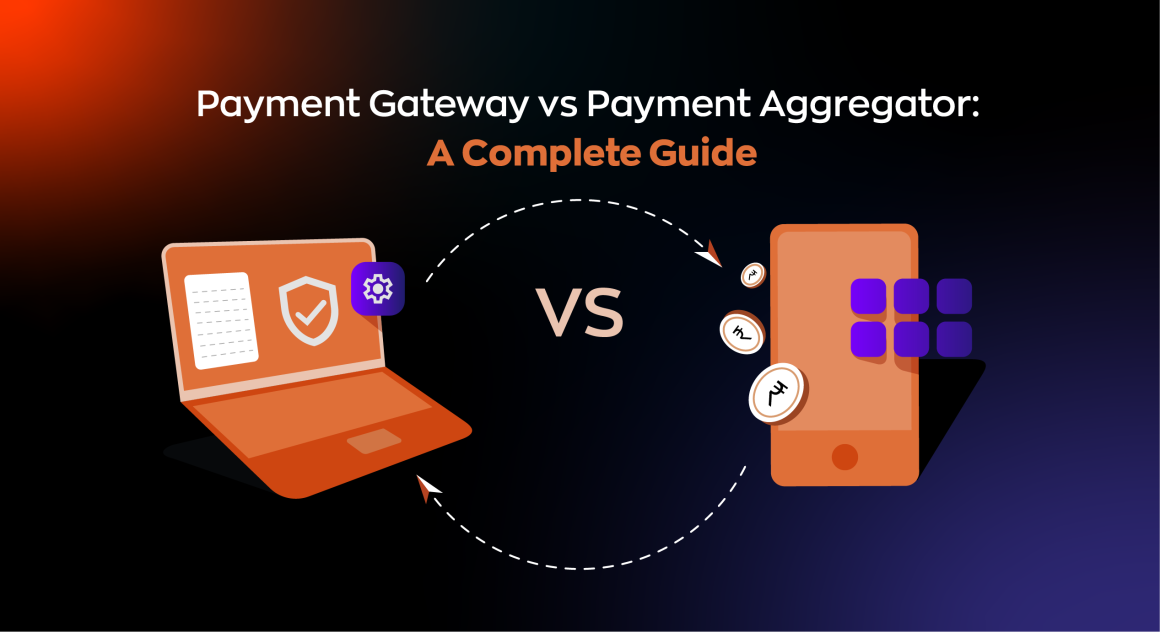
When comparing payment gateway vs payment aggregator: A gateway processes and secures transactions, while an aggregator manages fund collection and settlement across multiple merchants.
What is a Payment Aggregator?
A payment aggregator is a unified payment platform that enables merchants to accept multiple payment methods, such as credit cards, debit cards, UPI, and digital wallets, without the complexity of setting up individual merchant accounts with banks. It consolidates transactions from multiple merchants into a single account, streamlining onboarding and fund settlement so businesses can focus on operations instead of banking logistics.
Key Functions of a Payment Aggregator:
- Multi-Method Payment Acceptance: Enables merchants to accept diverse payment instruments, such as cards, UPI, net banking, and wallets, through a single integration, without requiring separate merchant accounts for each payment method.
- Streamlined Merchant Onboarding: Eliminates lengthy bank application processes by providing instant account activation, allowing businesses to start accepting payments within hours instead of weeks.
- Secure Transaction Processing: Handles payment processing and security compliance, ensuring all transactions are encrypted and protected without merchants managing infrastructure directly.
- Fund Consolidation & Settlement: Aggregates payments from multiple merchants, validates transactions, and settles consolidated funds to individual merchant accounts typically within 24-48 hours.
Benefits of Using a Payment Aggregator:
- Accept multiple payment methods instantly without managing separate merchant relationships.
- Eliminate weeks of bank approval processes with immediate account activation.
- Reduce operational complexity by offloading security, compliance, and settlement management.
- Lower costs compared to managing individual merchant accounts and banking relationships.
- Simplify financial operations with consolidated reporting and single-account fund management.
Why Payment Aggregators Matter:
Payment aggregators remove the banking and operational friction that prevents businesses, especially emerging ones, from accepting digital payments. By consolidating merchant accounts and managing payment infrastructure centrally, aggregators make payment acceptance accessible to businesses of any size, eliminating the need for direct bank relationships and complex account setup procedures.
How Payment Aggregators Work in Practice:
- Merchant registers with the aggregator with minimal documentation
- Aggregator activates the merchant account instantly without bank verification
- Merchant accepts customer payments through multiple methods (cards, UPI, wallets)
- Aggregator securely processes and holds all transactions
- Transactions are validated and consolidated across all merchants
- Merchant receives settled funds in their withdrawal account with detailed reports
Example: A merchant registers with a payment aggregator and instantly accepts cards, UPI, and wallets through a single platform. No bank setup required.
When comparing payment gateway vs payment aggregator: A gateway processes individual transactions securely, while an aggregator consolidates multiple merchants and manages settlement across a shared account. Aggregators simplify payment acceptance for businesses that prioritize operational ease.
Key Differences Between Payment Gateway and Payment Aggregator
| Aspect | Payment Gateway | Payment Aggregator |
| Role | Facilitates secure payment processing. | Aggregates and manages payments for multiple merchants. |
| Merchant Account | Requires individual merchant accounts with banks. | Uses a shared escrow account for multiple businesses. |
| Setup Time | Can take longer to set up due to direct bank integration. | Quick and easy onboarding process. |
| Ideal For | Larger businesses with high transaction volumes, which also require customized checkout experiences. | Larger businesses with high transaction volumes which also require customized checkout experiences. |
Understanding these differences in the payment gateway vs payment aggregator comparison can help businesses determine which solution suits their operations better.
Which One is Right for Your Business?
Choose a Payment Gateway(PG) If:
- You run a large-scale business with high transaction volumes.
- You need complete control over your payment process.
- You can manage compliance requirements like PCI DSS certification in case you want a customized checkout experience.
Choose a Payment Aggregator(PA) If:
- You are a startup or small business looking for a quick payment solution.
- You want to avoid the hassle of setting up a direct merchant account with a bank.
- You need a cost-effective way to start accepting payments.
Can They Work Together?
Yes, payment gateways and payment aggregators often complement each other. Many aggregators integrate payment gateway technology into their offerings to provide a seamless payment experience.
For example, an aggregator may use a third-party payment gateway to process transactions while handling fund settlement and compliance.
How Can a Payment Aggregator(PA) Offer PG Services?
- Dual licensing: In India, a payment aggregator can obtain both a PA license (for fund aggregation and settlement) and a PG license (for processing payments securely) from the Reserve Bank of India (RBI). This allows the aggregator to handle funds and provide the technological backbone for payment processing.
- Integrated solutions: Payment aggregators can embed gateway technology into their systems to enable smooth transaction processing, fraud detection, and multi-channel payment acceptance.
- Infrastructure ownership: Aggregators can develop or partner with a payment gateway to control the entire payment flow, from collecting customer payment details to settlement.
Example of Dual Functionality
- Payment Aggregator Function: A small business registers with an aggregator, which collects payments on its behalf and settles the funds after deducting fees.
- Payment Gateway Function: The same aggregator offers secure, tokenized processing for the payments made by customers using its payment gateway technology.
Benefits of an Aggregator Offering PG Services
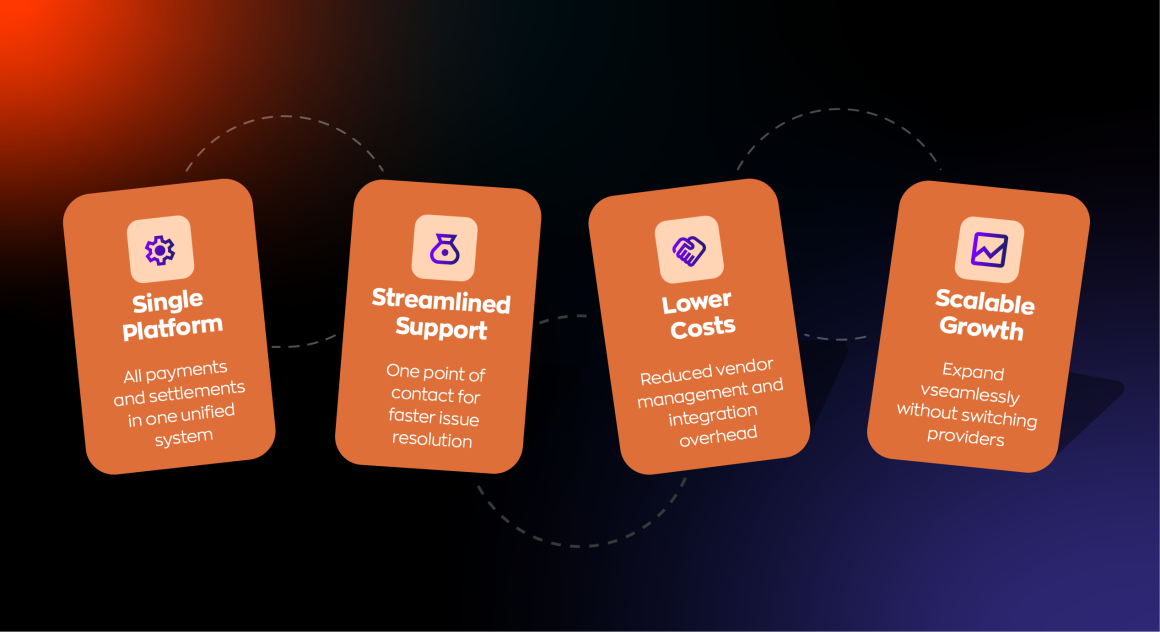
- Convenience for merchants: Merchants can access a one-stop solution for both payment processing and fund aggregation.
- Cost-effective: Merchants avoid the complexity and cost of integrating separate solutions for PA and PG services.
- Streamlined support: Technical support and dispute resolution are centralized, reducing friction.
- Scalability: As a merchant grows, it can continue using the aggregator’s integrated services rather than switching providers.
Challenges of an Aggregator Offering PG Services
- Operational complexity: Managing dual functions requires strict compliance with separate regulations for PAs and PGs.
- Cost of compliance: Aggregators must meet RBI’s stringent guidelines, which would differ for both PA and PG licences.
Finding the Right Payment Solution for Your Business:
Your choice between a payment gateway and aggregator depends on your business stage, scale, and control requirements. Startups typically benefit from aggregators’ speed and simplicity, while enterprises need gateways’ customization and scalability.
Not sure which is right for you? Zwitch helps businesses select and implement the ideal payment infrastructure. Whether you’re launching fast or scaling enterprise operations, we ensure your payment setup aligns with your business goals.
Future Trends in Payment Gateways and Aggregators
- SaaS tools: CRMs or accounting platforms are integrating payments directly into their application with the help of these payment providers.
- Advanced security measures: Both solutions are adopting tokenization and biometric authentication to provide enhanced security to merchants.
- AI and analytics: Aggregators and gateways are using AI to detect fraud and provide merchants with insights about payment trends.
Conclusion
Both payment gateways and payment aggregators are essential components of the digital payments ecosystem, but their roles are distinct. For business owners, the payment gateway vs payment aggregator decision hinges on your scale, needs, and resources.
A payment gateway offers control and scalability, while a payment aggregator provides simplicity and accessibility. By understanding these differences, you can make an informed decision that aligns with your business goals.
FAQs
What is the main difference between a payment gateway and a payment aggregator?
The key difference lies in their roles: a payment gateway facilitates secure payment processing between customers and merchants, while a payment aggregator enables businesses to accept payments without the need for individual merchant accounts, using a shared system for fund collection and settlement.
Can a business use both a payment gateway and a payment aggregator
Yes, many businesses use both. For example, a payment aggregator might leverage a third-party payment gateway to securely process transactions while handling fund settlement and merchant onboarding. This combination offers convenience and security in payment processing.
Which is better for small businesses: a payment gateway or a payment aggregator?
For small businesses or startups, a payment aggregator is often the better choice as it offers quick onboarding, reduced compliance efforts, and cost-effective solutions. However, as businesses grow and require more control over payment processes, transitioning to a payment gateway might become necessary.