If you’re building a fintech product, managing B2B collections, or scaling a platform business in India, chances are you’ve come across both these terms.
And chances are, you’ve used them interchangeably. That’s where problems start.
A collection virtual account and a collection wallet are fundamentally different components of your payment collection infrastructure. Choosing the wrong one, or conflating the two, can quietly create reconciliation gaps, compliance risks, and operational inefficiencies as you scale.
Here’s why it matters more now than ever: India’s B2B payments market was valued at USD 38.9 billion in 2024 and is projected to reach USD 77 billion by 2033. As transaction volumes grow, your payment collection infrastructure needs to do more than just accept payments. It needs to ensure accuracy, traceability, and control.
Let’s break it down.
What Is a Collection Virtual Account?
A collection virtual account (VA) is a pass-through account with a unique account number (and sometimes a UPI ID) mapped to your primary bank account.
Money doesn’t sit in it. It flows through it.
How it works:
- You generate a unique virtual account via API (per customer, order, or use case)
- Share the account details with the payer
- The payer transfers funds via NEFT, RTGS, IMPS, or UPI
- Funds are credited directly to your main bank account
- You receive a webhook with full transaction and payer details automatically
What this enables:
- Automatic reconciliation without manual matching
- Clear payer identification at the source
- Direct settlement into your bank account
- Audit-ready transaction trails with zero extra effort
Think of virtual accounts as a smart routing and identification layer built into your payment collection infrastructure. There’s no float, no holding, no regulatory licensing headache, just clean, attributed inflows.
What Is a Collection Wallet?
A collection wallet is a stored-value account within your platform. Unlike virtual accounts, collection wallets hold funds.
How it works:
- Users load money into a wallet via UPI, cards, net banking, or inbound transfer
- Funds sit within your platform’s internal ledger
- The balance can be spent, transferred between users, or withdrawn later
What this enables:
- Balance storage within your product ecosystem
- Internal transfers and split payments between users
- Support for refunds, cashback credits, and loyalty incentives
- Pooled fund management for marketplace platforms
Collection wallets are best suited for platforms where users need to store and use money within the product experience, not just send it to a business.

If your primary need is to collect and attribute inbound payments, virtual accounts are your tool. If your need is to store and distribute money on a platform, wallets are the answer, but they come with regulatory obligations.
Collection Virtual Account vs Collection Wallet: Key Differences
| Parameter | Collection Virtual Account | Collection Wallet |
| Holds funds? | No, pass-through only | Yes, stores balance |
| Flow of funds | Directly to your bank account | Stored first, settled later |
| Reconciliation | Automatic via webhook-level mapping | Requires internal ledger reconciliation |
| Payer identification | Built-in and precise | Needs mapping post-transaction |
| Payment modes | NEFT, RTGS, IMPS, UPI | UPI, cards, net banking |
| Settlement | Instantly to your bank | Depends on the withdrawal/settlement cycle |
| Regulatory requirement | Bank-backed; minimal licensing | Requires RBI PPI licence |
| Scalability | Highly scalable via API (millions of VAs) | Limited by KYC norms and wallet caps |
| Transparency | High, payer-level visibility per transaction | Lower, pooled balances |
| Best for | B2B collections, EMIs, invoices, and loan repayments | Consumer apps, marketplaces, internal credits |
Where Each One Fits in Your Payment Collection Infrastructure
Use Collection Virtual Accounts When:
- You’re collecting EMIs, loan repayments, or subscription payments from a large customer base
- You need automatic reconciliation and per-payer visibility without any manual effort
- You handle B2B or B2B2C bank transfers (NEFT/RTGS/IMPS/UPI)
- You want funds to land directly in your current account, with no intermediate holding
- You’re building scalable payment collection infrastructure for NBFCs, edtech, SaaS, or insurance platforms
- You need to assign unique account numbers per customer, per campaign, or per invoice
Use Collection Wallets When:
- You’re building a consumer-facing product where users store and spend money within your app
- Your platform requires split payments or internal user-to-user transfers
- You need to manage cashbacks, credits, loyalty points, or refund balances that users redeem over time
- You operate a marketplace where vendor payouts happen from a pooled balance
- Your business model involves pre-funded account balances controlled by the end user
Why Mixing Them Up Can Cost You
Many growing businesses blur the line between these two, and the consequences tend to show up at the worst time.
1. Compliance exposure
Operating a wallet-like structure without an RBI Prepaid Payment Instrument (PPI) licence is a regulatory risk. Many platforms accidentally build stored-value mechanics using virtual accounts, holding funds in them longer than intended, and cross into regulated territory without realising it. If you’re holding customer money in a platform balance and enabling them to spend it, you likely need a PPI licence.
2. Reconciliation chaos
Without per-payer virtual account mapping, you lose automatic attribution of who paid what. You’re back to matching UTR numbers against spreadsheets, chasing remittance screenshots, and burning finance team hours on work that should be zero-touch.
3. Cash flow blind spots
When funds sit in collection wallets, they don’t immediately reflect in your operational bank account. For businesses managing working capital tightly, this creates real-time visibility gaps that can distort treasury decisions.
4. Product limitations at scaleVirtual accounts scale seamlessly; you can generate millions via API with no incremental compliance cost. Collection wallets, on the other hand, come with RBI-mandated KYC thresholds and transaction caps that create user friction at scale, especially for high-volume B2B platforms.
Real-World Use Cases
To make this concrete, here’s how both tools look in practice.
Virtual Account in action: An NBFC assigns a unique virtual account number to each borrower. Every EMI payment made via NEFT, UPI, or IMPS is automatically attributed to that borrower’s account. No manual matching. No reconciliation delay. Finance gets a clean, real-time view of repayments across a portfolio of thousands of loans.
Collection Wallet in action: An e-commerce marketplace holds vendor earnings in wallet balances. Sellers accumulate credits as orders are fulfilled. The platform disburses payouts weekly to their bank accounts. Users can also apply the wallet balance toward return credits or ad spend within the platform.
Both tools work, but only when matched to the right use case.
How Zwitch Helps You Build the Right Infrastructure
Choosing between virtual accounts and collection wallets is only part of the equation.
The real challenge is building a payment collection infrastructure that scales cleanly—without breaking reconciliation, visibility, or control.
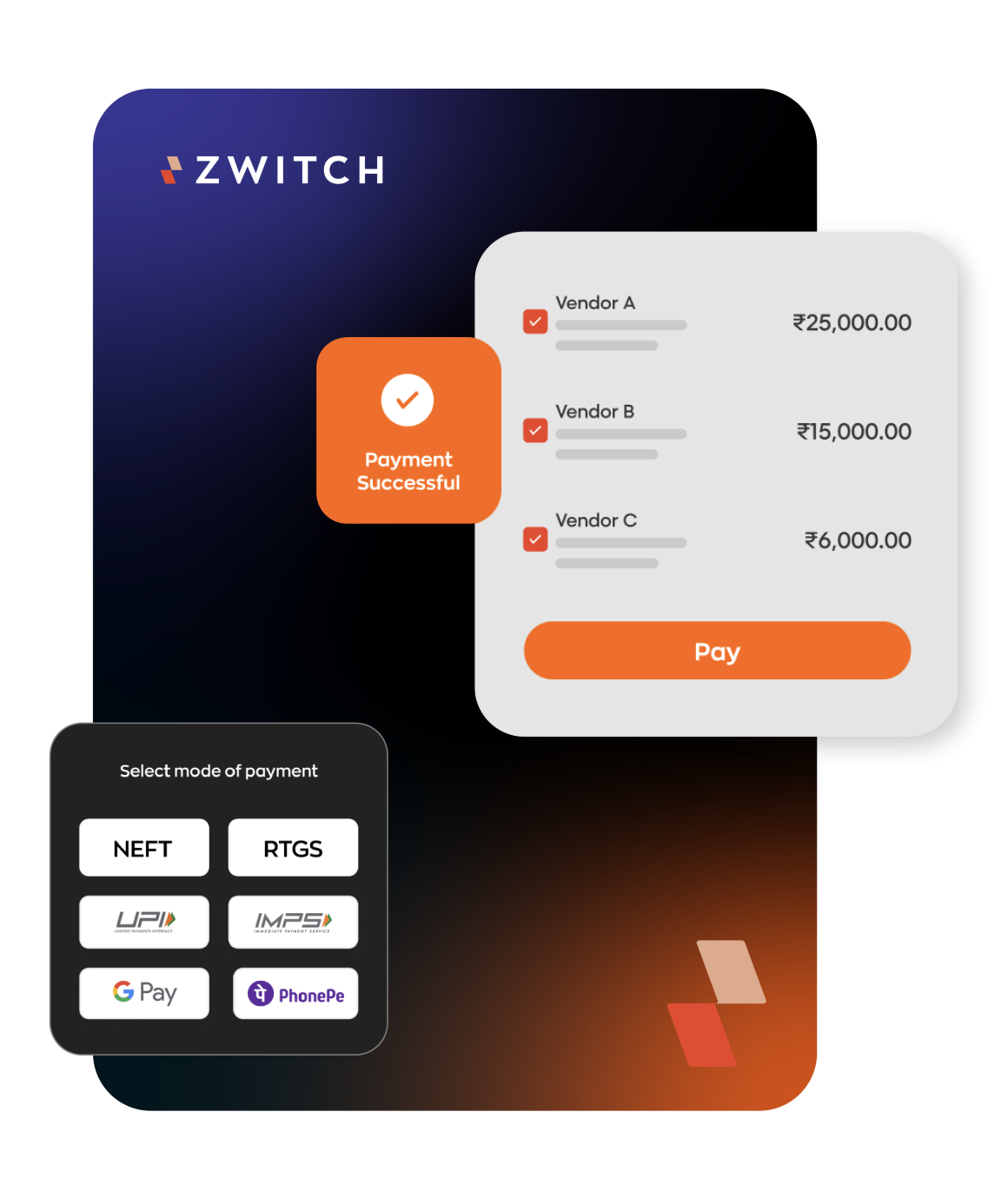
With Zwitch, you can set up a system where every payment is automatically identified, reconciled, and settled—without manual intervention.
- Collect with clarity: Generate virtual accounts at scale and ensure every payment comes with built-in payer identification
- Reconcile in real time: Get structured transaction data and webhooks that keep your systems instantly in sync
- Accept across rails: Support UPI, NEFT, RTGS, IMPS, and gateway-based payments in one flow
- Improve cash flow visibility: Access funds faster with streamlined settlement workflows
- Support complex use cases: Handle split settlements, payouts, and multi-party flows without added ops overhead
- Build on a trusted layer: Add verification and KYC checks to ensure every transaction is tied to a validated identity
Instead of stitching together multiple tools across vendors, Zwitch gives you a unified payment collection infrastructure built for accuracy, control, and scalability.
What to Ask Before You Build
Before committing to either approach, run through these questions:
- Does money need to sit somewhere, or just flow through?
- Do I need automatic payer-level reconciliation, or can I afford manual matching?
- Am I solving for inbound collection, or internal balance management?
- Do I have, or plan to obtain, an RBI PPI licence?
- Will my transaction volumes make per-VA API generation a better fit than a pooled balance?
Your answers will define how efficient and how compliant your payment collection infrastructure is as you grow.
Final Thoughts
Collection virtual accounts and collection wallets are both valuable, but they solve fundamentally different problems.
- Collection wallets optimise for storage and in-product usage
- Virtual accounts optimise for collection, attribution, and reconciliation
For most growing businesses, the real challenge isn’t just collecting money. It’s building a payment collection infrastructure that ensures you always know who paid, how much, and for what, without manual effort.
Get that right, and everything downstream: accounting, compliance, cash flow forecasting, becomes significantly easier.
Ready to Upgrade Your Payment Collection Infrastructure?
If you’re looking to move from manual reconciliation and fragmented systems to a streamlined, scalable setup, Zwitch can help you build a reliable payment collection infrastructure from day one.
Automate reconciliation → Get real-time payment visibility → Scale collections without operational complexity
Get started with Zwitch today.
FAQs
1. What is the difference between a collection virtual account and a collection wallet?
A collection virtual account routes payments directly to your bank with automatic payer identification, while a collection wallet stores funds within a platform for later use or transfer.
2. Do virtual accounts hold money?
No. Virtual accounts are pass-through accounts. Funds flow directly to your underlying bank account; nothing is held in the VA itself.
3. When should I use collection wallets?
Use collection wallets when your platform requires users to store, spend, or transfer money internally, such as marketplaces, consumer apps, or credit/cashback ecosystems.
4. Are collection wallets regulated in India?
Yes. Collection wallets that hold customer funds require a Prepaid Payment Instrument (PPI) licence from the RBI, along with compliance with KYC norms and transaction limits.
5. Can virtual accounts and collection wallets be used together?
Yes. Many platforms use virtual accounts for inbound collections and collection wallets for managing internal balances, vendor credits, or user incentives, both working in tandem within the same payment collection infrastructure.